manual pour over
Manual pour over is gaining popularity, offering a unique brewing experience. Saltwater Coffee now sells canned pour-over, showcasing its appeal.
Researchers at the University of Pennsylvania are refining the technique, emphasizing precision and control.
What is Manual Pour Over?
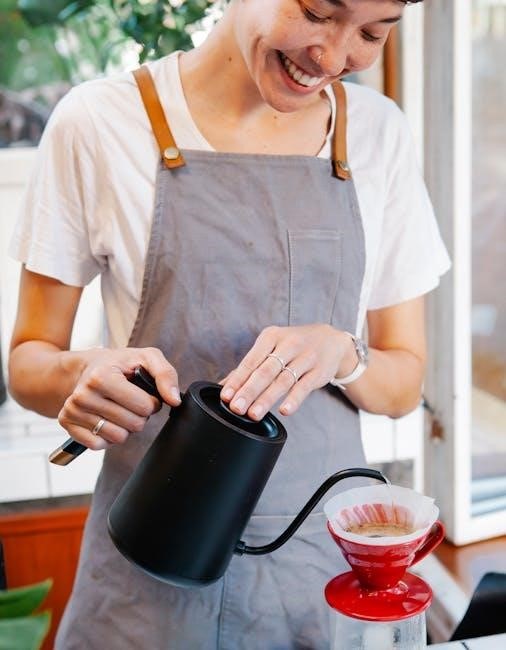
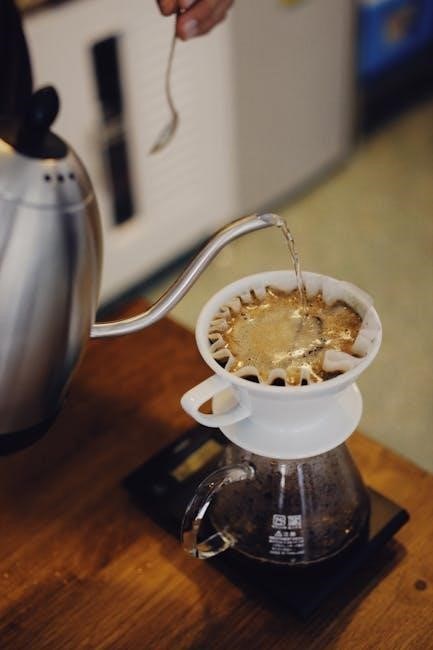
Manual pour over is a coffee brewing method where hot water is slowly and deliberately poured over coffee grounds, held within a filter-lined dripper. Unlike automated drip machines, you control every variable – water temperature, pour rate, and saturation. This hands-on approach allows for a highly customized and nuanced cup of coffee.
It’s a method celebrated for its ability to highlight the subtle flavors and aromas of high-quality beans. Recent innovations, like canned pour-over from Saltwater Coffee, demonstrate its growing accessibility. Researchers are even analyzing the physics of the pour, aiming for optimal extraction and flavor profiles. It’s a mindful, engaging brewing process.
Why Choose Pour Over?
Pour over coffee offers unparalleled control over the brewing process, resulting in a superior cup. Unlike automatic methods, you dictate every aspect, influencing the final flavor. This precision allows you to truly experience the unique characteristics of different coffee beans.
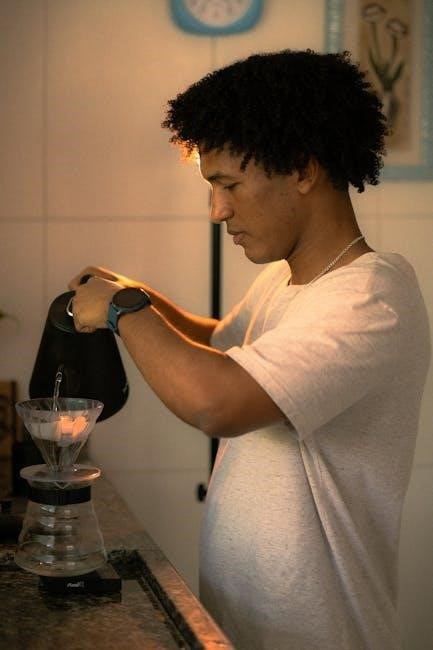
The method’s popularity is evident in innovations like canned pour-over, offering convenience without sacrificing quality. Researchers are dedicated to perfecting the technique, highlighting its potential. It’s a rewarding experience for coffee enthusiasts seeking a deeper connection to their brew, and a mindful alternative to faster methods.
Essential Equipment for Pour Over
Successful pour over requires specific tools: a dripper, filters, a gooseneck kettle, a grinder, and a scale. These components ensure precision and optimal flavor extraction.
The Pour Over Dripper
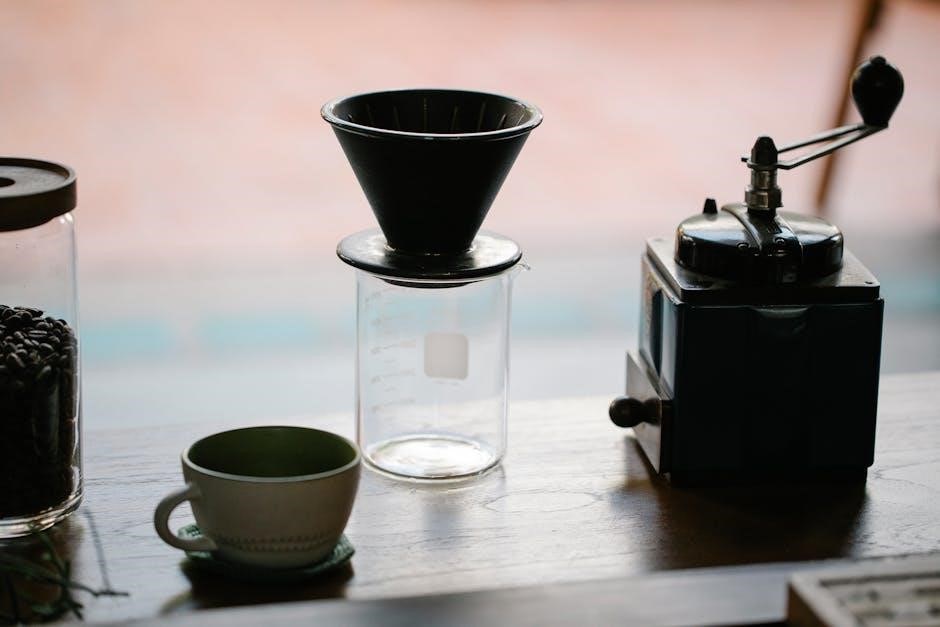
The pour over dripper is central to the brewing process, dictating flow rate and extraction. Various materials exist, including ceramic, glass, plastic, and metal, each influencing heat retention and flavor. Ceramic drippers offer excellent heat stability, while glass provides visual clarity.
Popular designs include the Hario V60, known for its conical shape and spiral ribs, promoting even extraction. The Kalita Wave features a flat bottom and wave filters, offering consistent results. Choosing the right dripper depends on personal preference and desired control over brewing variables. Consider the filter type compatibility as well.
Paper Filters: Types and Considerations
Paper filters are essential for a clean cup of pour over coffee, removing oils and sediment. Two primary types exist: bleached and unbleached. Bleached filters are processed for purity, potentially imparting a slight paper taste if not rinsed thoroughly. Unbleached filters retain some wood pulp flavor, which some find acceptable or even desirable.
Filter shape also matters; Hario V60 filters are conical, while Kalita Wave filters are flat-bottomed, matching their respective drippers. Filter thickness impacts flow rate – thinner filters allow faster flow, while thicker filters provide more resistance. Pre-rinsing filters with hot water is crucial to eliminate paper taste and warm the dripper.
Gooseneck Kettle: Control and Precision
A gooseneck kettle is paramount for manual pour over, offering unparalleled control over water flow. Its elongated, curved spout allows for a slow, steady, and precise pour – crucial for even saturation of the coffee grounds. This precision directly impacts extraction quality, preventing channeling and ensuring a balanced brew.
Unlike standard kettles, gooseneck models minimize turbulence, enabling consistent pouring patterns like spirals or pulses. Many feature temperature control, allowing you to heat water to the ideal range (typically 195-205°F). Investing in a quality gooseneck kettle significantly elevates the pour over experience and brew consistency.
Coffee Grinder: Freshness is Key
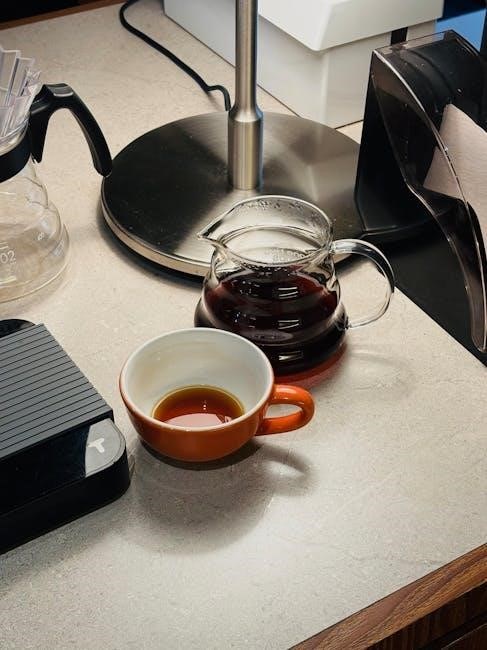
A high-quality coffee grinder is non-negotiable for exceptional manual pour over. Pre-ground coffee loses flavor rapidly, diminishing the nuanced aromas and tastes. Grinding beans immediately before brewing unlocks their full potential, delivering a vibrant and aromatic cup.
Burr grinders are preferred over blade grinders, as they produce a consistent grind size – vital for even extraction. Consistency prevents both under-extraction (sourness) and over-extraction (bitterness). Investing in a burr grinder, whether manual or electric, is a cornerstone of mastering the pour over method and achieving optimal flavor.
Coffee Scale: Accuracy Matters
Precision is paramount in manual pour over, and a coffee scale is your most valuable tool. Consistent coffee-to-water ratios are crucial for repeatable results. Eyeballing measurements introduces variability, impacting the final brew’s taste. A scale, accurate to 0.1 grams, ensures you use the correct amount of coffee and water each time.
Beyond ratio, a scale helps monitor bloom weight and total brew time. These factors significantly influence extraction. Utilizing a scale transforms pour over from an art to a science, allowing for controlled experimentation and consistent, delicious coffee. It’s an investment in brewing mastery.
The Coffee: Bean Selection and Grind Size
Bean quality and grind size are vital for exceptional pour over; Selecting fresh, high-quality beans unlocks nuanced flavors. Grind size impacts extraction, influencing the coffee’s final taste profile.
Choosing the Right Coffee Beans
Selecting coffee beans for pour over demands careful consideration. Opt for freshly roasted, whole bean coffee, as pre-ground coffee loses aroma and flavor rapidly. Single-origin beans highlight unique characteristics, while blends offer balanced profiles.
Consider your preferred taste: lighter roasts showcase acidity and floral notes, while darker roasts deliver boldness and chocolatey undertones. Experiment with beans from various regions – Ethiopian Yirgacheffe, Kenyan AA, or Sumatran Mandheling – to discover your favorites.
Ultimately, the “right” bean is subjective, dependent on personal preference. Prioritize quality and freshness to elevate your pour over experience.
Understanding Grind Size for Pour Over
Grind size is crucial for successful pour over brewing. A medium-fine grind, resembling coarse sand, is generally recommended. This allows for optimal extraction without over or under-extraction.
Too fine a grind leads to slow dripping and bitter flavors, while too coarse a grind results in fast dripping and sour, weak coffee. Adjusting the grind size is a key element in dialing in your brew.
Experimentation is vital! Start with medium-fine and adjust based on taste. A burr grinder provides consistent particle size, essential for even extraction and a balanced cup.
The Pour Over Technique: Step-by-Step Guide
Mastering pour over involves rinsing the filter, blooming the coffee grounds, and then executing a slow, consistent pour for optimal flavor extraction.
Rinsing the Filter
Rinsing the paper filter before brewing is a crucial, often overlooked step in the manual pour over process. This simple action serves several important purposes. Firstly, it eliminates any papery taste that could negatively impact the final cup’s flavor profile. Secondly, it pre-heats both the dripper and your serving vessel, contributing to temperature stability during brewing.
To rinse effectively, slowly pour hot water over the entire filter, ensuring it’s thoroughly saturated. Allow the water to drain completely through the dripper and into your carafe or mug. Discard this rinse water before adding your coffee grounds. This initial step sets the stage for a cleaner, more flavorful pour over experience.
Blooming the Coffee
Blooming is a vital stage in manual pour over, unlocking the coffee’s full potential. It involves saturating the freshly ground coffee with a small amount of hot water – roughly twice the weight of the grounds. This initial pour allows the coffee to ‘bloom,’ releasing trapped carbon dioxide gas.
You’ll observe bubbling as the gas escapes, a sign of freshness and proper degassing. Allow the coffee to bloom for approximately 30-45 seconds. This process prepares the grounds for even extraction during the main pour, resulting in a more balanced and flavorful cup. Skipping the bloom can lead to a flat, underdeveloped brew.
The Main Pour: Consistent and Controlled
The main pour in manual pour over demands consistency and control. After blooming, slowly and steadily pour the remaining hot water over the coffee grounds. Maintain a gentle, even flow, ensuring all grounds are saturated. A gooseneck kettle is crucial for this precision, allowing you to direct the water with accuracy.
Avoid pouring directly onto the filter paper; focus on the coffee bed. The goal is a uniform extraction, preventing channeling (where water bypasses the grounds). A controlled pour rate is key – too fast, and the coffee will be under-extracted; too slow, and it may become bitter.
Pouring Patterns: Spiral vs. Pulse
Two primary pouring patterns dominate manual pour over: spiral and pulse. The spiral technique involves a continuous, circular motion, starting from the center and moving outwards, ensuring even saturation. This method is favored for its simplicity and consistent extraction.
Conversely, the pulse pour utilizes short, intermittent pours, allowing the coffee bed to settle between each addition. This technique offers greater control over extraction, particularly beneficial for lighter roasts. Experimentation is key; both patterns can yield excellent results depending on the coffee and dripper used. Mastering either requires practice and observation.
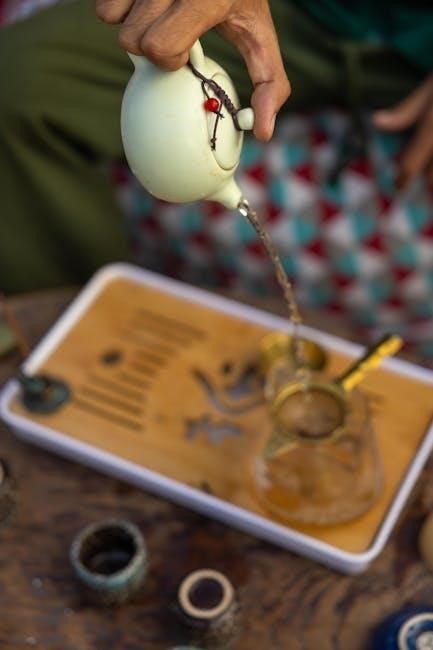
Troubleshooting Common Pour Over Issues
Addressing common problems like bitterness or sourness is crucial. Uneven extraction often stems from inconsistent pouring or improper grind size. Careful adjustments will improve flavor!
Bitter Coffee: Causes and Solutions
Bitterness in pour over coffee often indicates over-extraction. This happens when water dissolves too many compounds from the coffee grounds. Several factors contribute: grind size being too fine, water temperature being excessively high, or pour time being too long.
To resolve bitterness, start by coarsening your grind. A coarser grind reduces surface area exposure. Lowering the water temperature slightly (around 200°F/93°C) can also help. Finally, focus on a faster, more consistent pour to shorten the overall brew time. Experiment with these adjustments incrementally to find the sweet spot for your beans and setup.
Sour Coffee: Causes and Solutions
Sourness in pour over coffee typically signals under-extraction. This means insufficient compounds were dissolved from the coffee grounds during brewing. Common culprits include a grind size that’s too coarse, water temperature being too low, or an insufficient brew time. The coffee hasn’t had enough contact with the water to fully develop its flavors.
To correct sourness, begin by refining your grind to a finer setting. Increasing the water temperature slightly (up to 205°F/96°C) can also aid extraction. Ensure a thorough saturation of the grounds during the bloom and main pour, and consider extending the overall brew time.
Uneven Extraction: Identifying and Fixing
Uneven extraction in pour over results in a muddled, unbalanced cup – some areas over-extracted (bitter), others under-extracted (sour). Identifying this involves tasting inconsistencies; a brew lacking clarity or exhibiting both sour and bitter notes simultaneously. Often, it stems from inconsistent pouring technique, failing to saturate all grounds equally.
To fix uneven extraction, focus on a consistent, circular pouring motion. Ensure all coffee grounds are evenly wet during the bloom and subsequent pours. A gooseneck kettle is crucial for control. Adjust your pouring speed and pattern to maintain a consistent water level. Consider gently stirring the slurry during the bloom to break up any clumps.
Advanced Pour Over Techniques
Mastering pour over involves refining water temperature, exploring pre-infusion methods, and meticulously adjusting grind size. These techniques unlock nuanced flavors and elevate your brewing.
Water Temperature Control
Precise water temperature is crucial for optimal pour over extraction. Generally, a temperature between 195-205°F (90-96°C) is recommended, though this varies based on bean origin and roast level.
Lower temperatures can result in under-extraction, leading to sour or underdeveloped flavors. Conversely, excessively hot water can cause over-extraction, producing bitterness.
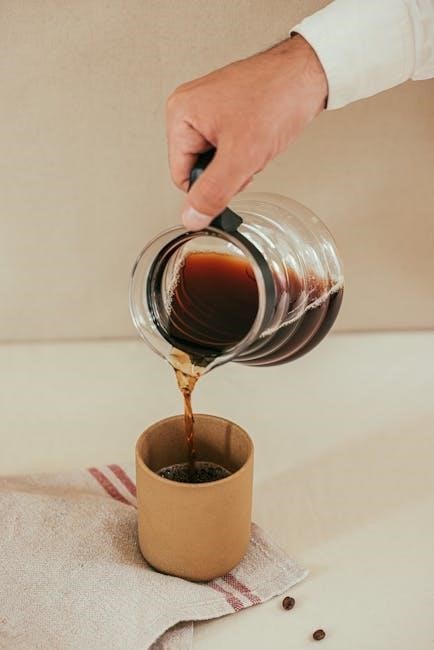
Investing in a gooseneck kettle with temperature control is highly beneficial. Consistent temperature throughout the brewing process ensures even extraction and a balanced cup. Experimenting within the recommended range allows you to fine-tune the flavor profile to your preference.
Pre-Infusion Techniques
Pre-infusion, also known as blooming, is a vital step in manual pour over. It involves saturating the coffee grounds with a small amount of hot water – roughly twice the weight of the coffee – and allowing them to rest for 30-45 seconds.
This process allows the coffee to degas, releasing trapped carbon dioxide. Degassing creates space for water to evenly saturate the grounds during the main pour, leading to a more balanced extraction.
Observe the bloom; a good bloom indicates fresh coffee. Proper pre-infusion enhances flavor clarity and reduces bitterness, contributing to a superior cup of pour over coffee.
Adjusting Grind Size for Optimal Flavor
Grind size is crucial for successful manual pour over. A grind that’s too coarse results in underextraction – a sour, weak cup. Conversely, a grind too fine leads to overextraction, producing bitterness.
Generally, a medium-fine grind, resembling coarse sand, works well as a starting point. However, adjust based on taste and brewing time. If the brew is too fast, grind finer. If it’s too slow, grind coarser.
Experimentation is key! Different beans and roasts require different grind settings. Consistent adjustments, coupled with careful observation, unlock the full flavor potential of your pour over coffee.
Pour Over vs. Other Brewing Methods
Pour over offers greater control than drip machines, and cleaner results than French press. It’s distinct from espresso’s intensity, prioritizing nuanced flavors and a delicate body.
Pour Over vs. French Press
Compared to the French press, pour over delivers a cleaner cup of coffee. The French press utilizes a metal filter, allowing more oils and sediment to pass through, resulting in a heavier body and potentially muddier flavor.
Pour over, with its paper filter, traps these oils and sediments, producing a brighter, more nuanced brew. While the French press is known for its simplicity and full-bodied character, pour over emphasizes clarity and highlights the coffee’s delicate aromatics.
Ultimately, the choice depends on preference – a robust, immersive experience with French press, or a refined, clean taste with pour over.
Pour Over vs. Drip Coffee Maker
Unlike automatic drip coffee makers, manual pour over grants complete control over brewing variables. Drip machines automate the process, often sacrificing precision for convenience. Pour over allows adjustments to water temperature, pour speed, and saturation, impacting the final flavor profile.
Drip machines can sometimes produce inconsistent results, while skilled pour over technique yields a more refined and balanced cup. While drip coffee makers excel in brewing larger batches efficiently, pour over focuses on quality and a personalized brewing experience.
The manual method demands engagement, but rewards the user with a superior, customized brew.
Pour Over vs. Espresso
Pour over and espresso represent vastly different coffee experiences. Espresso utilizes high pressure to force hot water through finely-ground coffee, creating a concentrated shot with crema. Pour over, conversely, relies on gravity and a slow, controlled pour to extract flavor.

Espresso delivers an intense, bold flavor, often used as a base for milk-based drinks. Pour over emphasizes clarity and nuanced flavors, showcasing the coffee bean’s origin characteristics; While espresso requires specialized, expensive equipment, pour over is relatively accessible.
Ultimately, the choice depends on preference – a quick, powerful shot or a delicate, aromatic brew.
Cleaning and Maintenance
Regular cleaning ensures optimal pour over performance. Rinse your dripper and kettle after each use. Consider environmental impact when disposing of paper filters.
Cleaning Your Dripper and Kettle
Maintaining your pour over equipment is crucial for consistently delicious coffee. After each brew, immediately rinse your dripper with warm water to remove coffee oils and residue. For a deeper clean, occasionally use a mild dish soap, ensuring a thorough rinse afterward to eliminate any soapy taste.
Your gooseneck kettle also requires attention. Regularly descale your kettle, especially if you have hard water, using a descaling solution or a mixture of vinegar and water. This prevents mineral buildup that can affect water temperature and flow. Rinse thoroughly after descaling. A clean kettle and dripper contribute significantly to the quality of your pour over experience.
Filter Disposal and Environmental Considerations
Used paper filters, a byproduct of pour over brewing, require mindful disposal. While compostable, ensure your local composting facility accepts paper filters, as some coatings may hinder breakdown. If composting isn’t an option, dispose of them with your regular waste.
Consider reusable metal filters as an environmentally friendly alternative. Though requiring more meticulous cleaning, they eliminate paper waste entirely. When choosing filters, look for unbleached options to minimize chemical residue. Responsible disposal and exploring reusable alternatives demonstrate a commitment to sustainability alongside your enjoyment of exceptional pour over coffee.
Resources and Further Learning
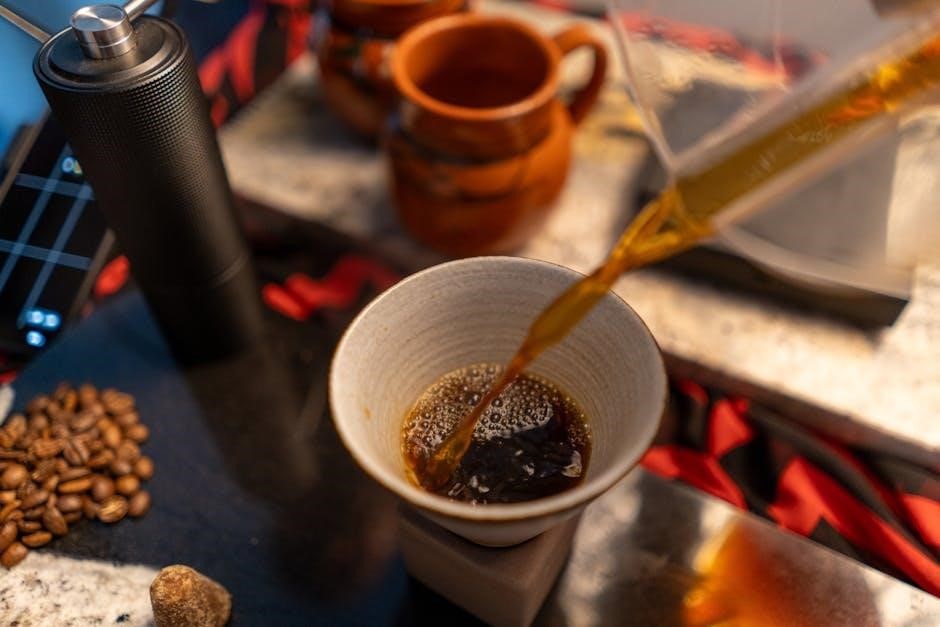
Explore online guides and tutorials to deepen your pour over knowledge. Engage with coffee communities and forums for shared experiences and advice.
Online Guides and Tutorials
Numerous online resources cater to aspiring pour over enthusiasts. Websites dedicated to coffee brewing often feature detailed guides, covering everything from equipment selection to advanced techniques. Video tutorials are particularly helpful, visually demonstrating the proper pouring motion and bloom process.
YouTube channels specializing in coffee offer a wealth of information, with baristas sharing their expertise and troubleshooting common issues. Blogs written by coffee professionals provide in-depth articles on bean selection, grind size, and water temperature. Don’t hesitate to explore these platforms to enhance your understanding and refine your pour over skills.
Coffee Communities and Forums
Engaging with fellow coffee lovers in online communities can significantly elevate your pour over journey; Dedicated forums provide a space to ask questions, share experiences, and receive feedback from experienced brewers. These platforms foster a collaborative learning environment, allowing you to troubleshoot issues and discover new techniques.
Reddit’s r/coffee is a popular hub for discussion, offering a diverse range of perspectives and advice. Facebook groups focused on pour over coffee connect enthusiasts locally and globally. Participating in these communities allows you to stay updated on the latest trends and deepen your passion for this brewing method.